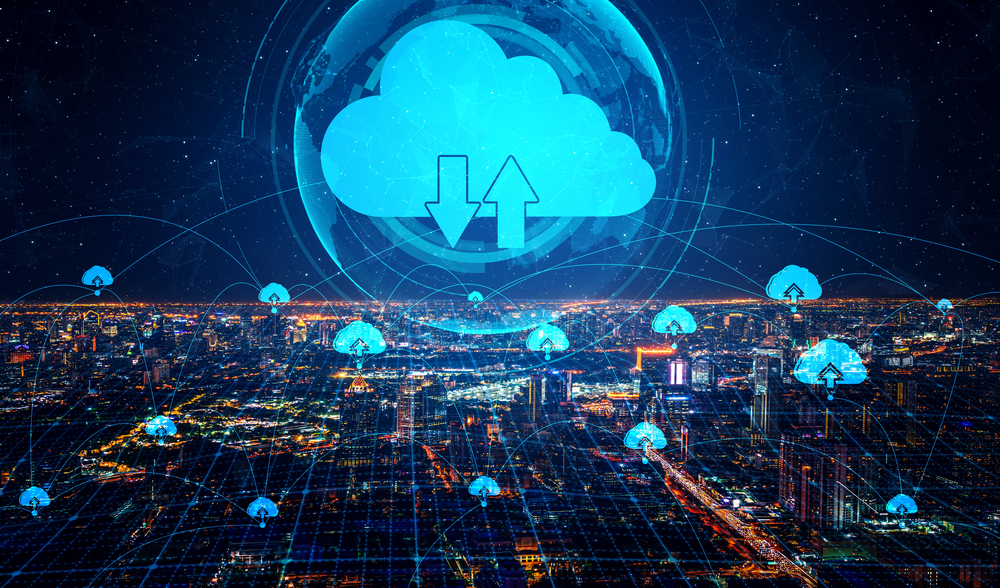
Real-time analytics and AI demand compute where data lives. Learn how distributed clouds, GPUs-as-a-Service, and Neoclouds enable fast, intelligent decisions.
Businesses of all types are increasingly moving to real-time operations. Specifically, financial services organizations, manufacturers, retailers, and more seek the ability to act on data as it is generated. As such, the ability to analyze streaming data in real time and make real-time data available to AI models and inferencing has become a competitive differentiator across industries. That capability is powering predictive maintenance, personalized recommendations, fraud prevention, autonomous systems, and dynamic supply chains.
Traditionally, the way to achieve true real-time intelligence was to make use of more powerful algorithms. However, what many are discovering today is that it also requires a new approach to how and where compute resources are deployed.
Increasingly, organizations are discovering that what is needed is a distributed cloud compute architecture where compute resources are available across multiple locations, from data centers to edge sites. Such an architecture is the key to unlocking the full potential of real-time analytics and AI.
Modern data rarely resides in a single location. Consider the growing footprint of sensors, cameras, and connected devices that now permeate every industry:
In all these scenarios, the data that drives insights and AI inference is created at the edge, often far from a centralized data center or public cloud region.
Historically, enterprises have relied on centralized clouds or on-premises data centers to aggregate and analyze their data. But this approach of moving data to the compute breaks down at scale.
Latency is the most obvious problem. When analytics or AI models must ingest, process, and respond to data in sub-second intervals, the round-trip time to a central cloud introduces unacceptable delays. Consider the distance an autonomous vehicle traveling 60 miles per hour travels in the time it would take for a cloud inference to return a result. Similarly, in industrial control systems, milliseconds can mean the difference between optimizing a process and shutting down an assembly line.
There’s also the question of bandwidth and cost. Constantly transferring massive data streams from high-definition video or high-frequency sensor readings back to a central location is expensive and often impractical. Moreover, privacy and regulatory considerations increasingly restrict the movement of certain types of data, requiring localized processing and storage.
The best approach to dealing with these issues is not to bring the data to the compute; bring the compute to the data.
See also: What Are Neoclouds and Why Does AI Need Them?
Enterprises are now embracing distributed compute strategies that extend analytics and AI processing closer to where data is generated. That includes deploying lightweight compute clusters, micro data centers, or even embedded AI accelerators at the edge. These local resources can perform initial filtering, aggregation, or inference before sending only relevant insights to a central system for deeper analysis.
But maintaining these distributed environments manually would be prohibitively complex. As a result, many are turning to new service models, such as GPUs-as-a-Service and emerging Neoclouds.
GPUs-as-a-Service: Accelerating Intelligence Everywhere
The latest generation of GPUs and AI accelerators has revolutionized deep learning, computer vision, and large-scale analytics. Yet, many edge sites or regional operations lack the capital or expertise to deploy and maintain specialized hardware.
GPUs-as-a-Service (GPUaaS) addresses this by allowing organizations to access high-performance compute capacity dynamically, wherever it’s needed. Cloud providers and emerging edge-cloud platforms are offering GPU clusters that can be consumed on demand—whether to retrain an AI model locally, process a surge in streaming data, or run inference close to the source of data.
This flexible access model extends AI acceleration beyond centralized hyperscale environments, enabling distributed intelligence across retail stores, factories, hospitals, and beyond.
Neoclouds: Bridging the Edge and Core
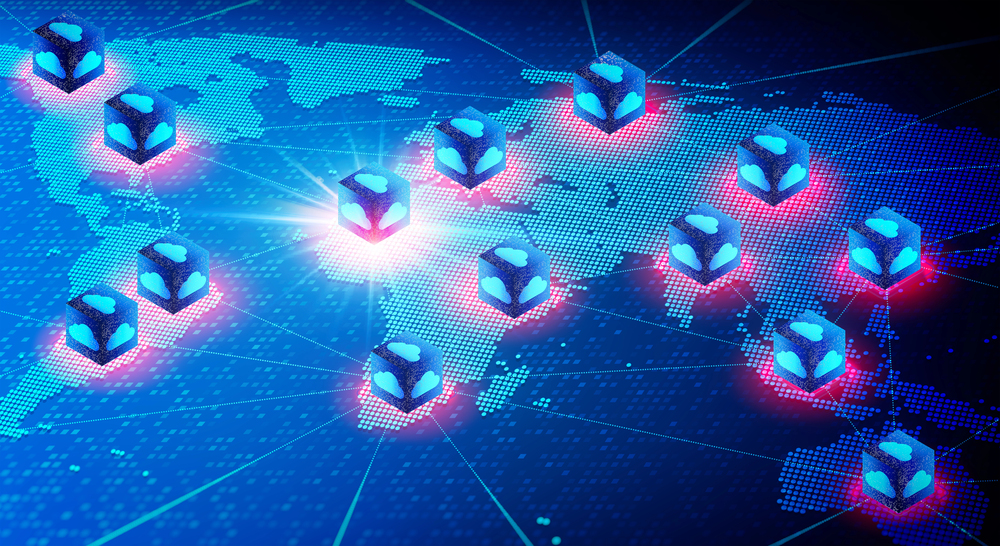
A newer concept, Neoclouds, represents the next evolution in distributed cloud computing. Unlike traditional public clouds, which are centralized by design, Neoclouds are natively distributed, combining the programmability and scalability of the public cloud with the locality and data sovereignty of the edge.
Neocloud providers operate small, geographically dispersed cloud nodes that are located near where data is generated. These nodes can host containers, microservices, and AI models, automatically federating with centralized infrastructure when needed. The result is a seamless, cloud-native environment spanning core, edge, and everything in between.
This approach delivers sub-millisecond latency, improved resilience, and compliance with regional data governance requirements. All of this is accomplished without forcing enterprises to manage disparate edge silos.
See also: What is NaaS and Why Does AI Need It?
As AI and real-time analytics become embedded in every business process, distributed compute capabilities will become as fundamental as networking itself. The enterprises that succeed will be those that are designed for data locality, low latency, and scalable intelligence from the start. They must also leverage distributed cloud platforms that place compute where the action is.
Salvatore Salamone is a physicist by training who has been writing about science and information technology for more than 30 years. During that time, he has been a senior or executive editor at many industry-leading publications including High Technology, Network World, Byte Magazine, Data Communications, LAN Times, InternetWeek, Bio-IT World, and Lightwave, The Journal of Fiber Optics. He also is the author of three business technology books.
Cloud Data Insights is a blog that provides insights into the latest trends and developments in the cloud data space. We cover topics related to cloud data management, data analytics, data engineering, and data science.
Property of TechnologyAdvice. © 2026 TechnologyAdvice. All Rights Reserved
Advertiser Disclosure: Some of the products that appear on this site are from companies from which TechnologyAdvice receives compensation. This compensation may impact how and where products appear on this site including, for example, the order in which they appear. TechnologyAdvice does not include all companies or all types of products available in the marketplace.