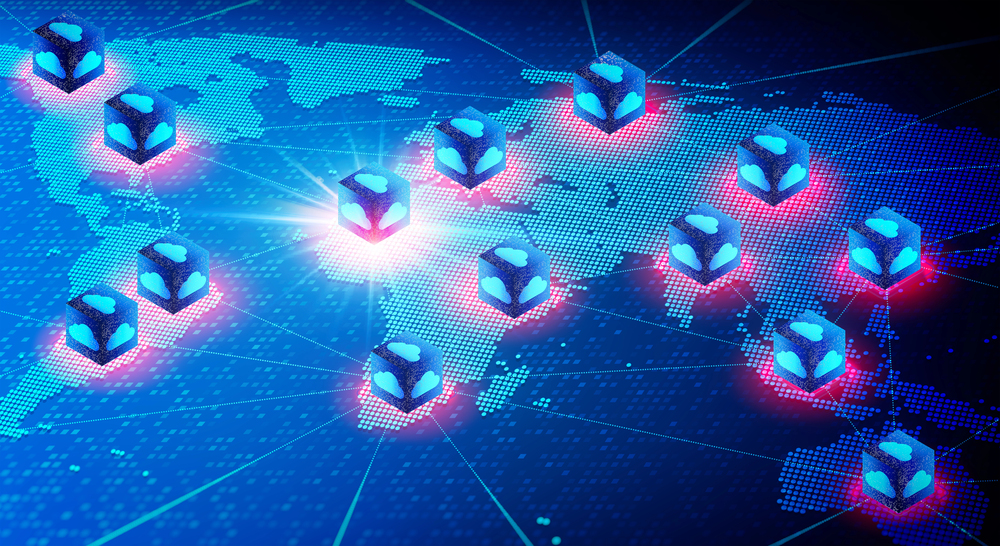
Quantum Computing as a Service (QCaaS) is reframing quantum as an accessible, consumption-based capability that enterprises can explore today.

The rapidly growing demand for compute power to support enterprise AI and real-time analytics efforts is intensifying interest in quantum computing. Training large language models, running high-fidelity simulations, optimizing complex supply chains, and processing continuous streams of real-time data all push classical architectures comprised of CPUs, GPUs, and large-scale clusters to their scaling and energy-efficiency limits.
As model sizes grow into the trillions of parameters and real-time decision systems require sub-second optimization across massive combinatorial spaces, incremental gains from traditional high-performance computing (HPC) technologies are becoming more expensive and power-hungry. Quantum computing, particularly when positioned as a specialized accelerator within hybrid HPC environments, offers a potential pathway to address certain classes of problems, such as optimization, probabilistic modeling, and molecular simulation, that scale poorly on classical systems.
See also: Cloud Evolution 2026: Strategic Imperatives for Chief Data Officers
For years, quantum computing was primarily considered for its use for cryptographic applications, both in breaking public-key encryption codes by accelerating factoring and for its potential to enhance communications security via quantum key distribution.
Additionally, most use cases assumed that a dedicated quantum computing system would be implemented as an independent element within an organization’s computing center.
That thinking still holds, but there has been a significant change in thinking about quantum computing for enterprise use over the last year.
First, quantum is increasingly eyed for its ability to meet particular compute demands of certain AI and real-time analytics applications. Second, there is growing interest in using quantum to complement existing HPC installations. To that end, the concept of a Quantum Processing Unit (QPU) has emerged, where, as the name implies, quantum resources would be used just as CPUs, GPUs, and other workload accelerators are today.
That expansive use of the technology is getting a boost largely because quantum computing is now being delivered through the same channel that democratized AI, HPC, and advanced analytics: the cloud.
See also: The Rise of Data Lakehouses in an AI-Driven Era
Quantum Computing as a Service (QCaaS) is reframing quantum as an accessible, consumption-based capability that enterprises can explore today.
At its core, QCaaS allows organizations to access quantum processing units (QPUs), simulators, and hybrid quantum-classical workflows via cloud platforms. Enterprises no longer need to purchase dilution refrigerators, manage cryogenic environments, or hire quantum physicists to maintain hardware. Instead, they interact with managed APIs, development kits, and orchestration frameworks, much as they would with GPUs or other AI accelerators in the cloud.
Several major providers are shaping this landscape. IBM was an early mover, commercializing cloud-based access to its quantum systems and positioning quantum as a hybrid extension of classical high-performance computing workflows. Microsoft followed with Azure Quantum, which aggregates hardware from multiple vendors while integrating quantum development into broader cloud and DevOps ecosystems. Amazon Web Services entered the space with Amazon Braket, offering a managed environment where developers can experiment with different quantum hardware backends alongside classical compute resources.
Specialized quantum hardware vendors such as IonQ, Rigetti Computing, and D-Wave contribute their systems to these cloud ecosystems, expanding the range of architectures available to enterprise users. The result is not a single monolithic quantum cloud, but a federated environment where organizations can benchmark, experiment, and iterate across multiple approaches.
See also: Could AI Make Quantum Computing Unnecessary?
What enterprises are purchasing through QCaaS is more than raw qubit time. They gain access to simulators that run on classical HPC infrastructure, software development kits for algorithm design, compilers optimized for noisy intermediate-scale quantum (NISQ) systems, and orchestration layers that integrate QPUs into conventional workflows.
In practical terms, quantum resources are increasingly treated as accelerators. They are invoked for specific subroutines within a broader compute pipeline rather than as standalone systems.
For most organizations, QCaaS is not yet about production deployment. It is about experimentation. A pharmaceutical firm might explore molecular modeling scenarios that push beyond the limits of classical simulation. A financial institution may test quantum-enhanced portfolio optimization algorithms. Energy providers can examine grid optimization challenges, while advanced manufacturers evaluate combinatorial problems in materials science or process scheduling.
In these early engagements, quantum computing serves two strategic purposes. First, it allows enterprises to benchmark quantum algorithms against classical HPC and quantum-inspired approaches, establishing realistic expectations. Second, it builds internal capability. Quantum literacy (understanding when and where quantum may provide an advantage) will become a competitive differentiator long before systems are ubiquitous.
The profile of early adopters reflects this strategic posture. Research-intensive industries such as pharmaceuticals, chemicals, and advanced manufacturing are prominent participants. Financial services firms, particularly those with quantitative trading and risk modeling expertise, are also actively experimenting. Energy utilities and national research laboratories are leveraging QCaaS to supplement existing supercomputing resources. Technology-forward enterprises with mature AI and HPC infrastructures are extending their experimentation portfolios to include quantum, treating it as a natural evolution of advanced compute strategy.
Looking ahead, QCaaS is likely to evolve along several fronts. Hybrid integration will deepen, with orchestration frameworks seamlessly distributing tasks across CPUs, GPUs, and QPUs. As error mitigation techniques improve and hardware matures, the focus will shift from proof-of-concept exploration to measurable performance gains. Cloud providers may introduce industry-specific quantum APIs, packaging optimization, chemistry simulation, or cryptographic research into more accessible service abstractions.
Pricing models will also mature. Today’s billing structures typically revolve around qubit time or task execution metrics. Over time, quantum services may be bundled within broader AI and HPC consumption tiers, further normalizing quantum as another cloud-native accelerator.
Salvatore Salamone is a physicist by training who has been writing about science and information technology for more than 30 years. During that time, he has been a senior or executive editor at many industry-leading publications including High Technology, Network World, Byte Magazine, Data Communications, LAN Times, InternetWeek, Bio-IT World, and Lightwave, The Journal of Fiber Optics. He also is the author of three business technology books.
Cloud Data Insights is a blog that provides insights into the latest trends and developments in the cloud data space. We cover topics related to cloud data management, data analytics, data engineering, and data science.
Property of TechnologyAdvice. © 2026 TechnologyAdvice. All Rights Reserved
Advertiser Disclosure: Some of the products that appear on this site are from companies from which TechnologyAdvice receives compensation. This compensation may impact how and where products appear on this site including, for example, the order in which they appear. TechnologyAdvice does not include all companies or all types of products available in the marketplace.