In an ever-evolving global economy, businesses are in a continuous race to harness data as a powerful propellant for innovation.



Sponsored by Ascend.io
In an ever-evolving global economy, businesses are in a continuous race to harness data as a powerful propellant for innovation. Despite this, prompt and efficient data delivery remains a formidable challenge. The construction, scalability, and maintenance of essential data pipelines are complex, tedious, and alarmingly error-prone.
Data engineers are drowning in repetitive work to enable data-driven decisions. Countless businesses find themselves wasting precious workforce time as traditional approaches to building data pipelines lead to failure because of the difficulty of managing and integrating the numerous single-point solutions for each step of the process.
The clear solution for forward-thinking businesses is to create automated pipelines, streamlining a process fraught with frustration and freeing the best and brightest tech minds to focus on strategic business advancement.

When the word automated is used when discussing data pipelines, it can carry different connotations. At times, it’s associated with the automation of a single step in a pipeline. For example, a solution that automates the extraction, transformation, and loading (ETL) of data from multiple sources into a data warehouse. Or more recently, it’s even been extended to imply the automation of code generation through generative AI.

However, when we reference ‘automation’ in this context, we are speaking of a holistic process that envelops an entire data pipeline, engineered within a single, unified platform. Automated data pipelines aren’t simply tools that conduct data from point A to point B. Instead, they understand not just the data they handle but also the code that manipulates this data. This allows automated data pipelines to identify changes, manage them, and intelligently apply these modifications across the entire data ecosystem.
This is a profound shift from traditional pipelines, with automation making these pipelines proactive rather than merely reactive.
As organizations transition towards data-driven models, the demand for timely, high-quality, and trusted data has never been higher. These data requirements inform accurate decision-making and enhance overall business efficiency. In this context, automated data pipelines are no longer a luxury but a necessity.
This leads us to examine the key components of an effective automated data pipeline:
Ability to easily build an end-to-end pipeline: The first component that defines automated data pipelines is their end-to-end construction within a single, unified platform. In the realm of data engineering, this is a paradigm shift away from fragmented solutions.

In the past, data engineers had the bandwidth to manually build individual connections between each data source and its corresponding analytics application. However, the complexity of today’s data ecosystems, characterized by numerous tools and applications, each demanding specific expertise, makes this approach impractical, if not obsolete.
Automated data pipelines provide an elegantly simple solution to this complex problem. They offer a consolidated platform that seamlessly handles data ingestion, transformation, orchestration, and sharing. By eliminating repetitive, manual tasks, they expedite the development process, cut costs, and optimize resource allocation.
The evolution of telephone call completion serves as a fitting analogy. In the early days, human operators manually connected calls via switchboards. Today, call routing and connection are automated, saving time and resources.
Ability to automatically detect and adjust to changes: The old saying goes: “The only constant in life is change.” Any change in a data pipeline, which will inevitably happen, can have great consequences.
For example, suppose the pipeline that provides data to a BI tool fails. If undetected, the routine would continue to make its assessments using outdated data. As one can imagine, there are many application areas where this would lead to erroneous results.
An automated data pipeline detects any change in code or data and responds to those changes in real time. Additionally, a suitable automated data pipeline solution must understand the inter-dependencies within a pipeline so that it can propagate any needed changes throughout an organization’s data pipelines.
Built-in observability to ensure data reliability: When pipelines are not automated, they can grow into increasingly complicated systems of code. That can make it difficult to trust the accuracy of the data. Specifically, in traditional pipelines, data quality issues can go undetected for months, which means business users and customers often use outdated or incorrect data to make real-time decisions.

In such environments, those responsible for the pipelines only hear about a problem after someone uses the data product and alerts them that something is wrong. The data engineers can then spend great amounts of time trying to get to the root cause of the problem before they can fix it.
An automated data pipeline has the capability to conduct built-in data quality checks and monitor data integrity at every step throughout a pipeline. Once an issue is detected, the solution must be able to intelligently address the problem.
Simple integration with data clouds: Moving data to the cloud to perform analytics is becoming essential. The volume of data being analyzed in businesses today combined needs the scalable storage and compute capacity of the cloud to run sophisticated analysis.
That is a trend that is poised for massive expansion. The global cloud analytics market size was evaluated at $26.8 billion in 2022 and is expected to surpass around $143.17 billion by 2032, growing at a CAGR of 18.24% between 2023 and 2032.
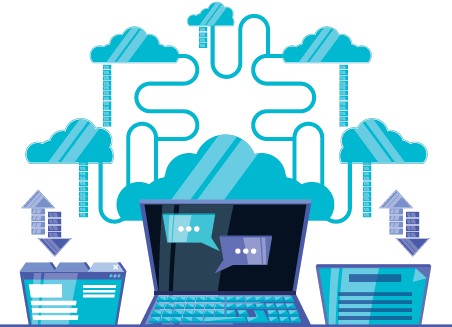
Data pipelines have an essential role to play. Automated data pipelines are able to connect to any cloud and share data between them. Data teams can start their day on Snowflake and end it on Databricks within a single platform.

Like the consolidation of tools in previous waves of automation, data pipeline automation replaces data stacks that have been assembled from multiple tools and platforms. These previous approaches have missed the mark due to one important issue: the need to scale.
Ascend.io is a data pipeline automation platform that enables data teams to build data pipelines 10x faster at 67% less cost. The product consolidates the modern data stack tools — data ingestion, transformation, sharing, and orchestration — and detects and propagates changes across your data ecosystem — boosting productivity and confidence in your pipelines. The technology behind this approach is unique and helps overcome the data pipeline scaling barrier.
What sets Ascend.io’s approach apart is the use of an immutable metadata model which captures every aspect of the pipelines and automates every operation with it. That is done with unique digital fingerprints that map not just every snippet of data but the data engineers’ code as well.
These fingerprint linkages ensure that all dependent pipelines maintain data integrity and availability for all users of the data. For data teams, scalable technology becomes a vehicle for managing change throughout an organization.

For example, the ability to track pipeline state in networks at a vast scale means the solution always knows the exact state of every node in every pipeline with certainty. It can constantly detect changes in data and code across the most complex data pipelines and respond to those changes in real time.
Automated data pipelines have been implemented across various industries to enhance efficiency, reduce costs, and boost data accessibility. Here are some compelling use cases that demonstrate their transformative impact:

These examples underscore the transformative potential of automated data pipelines in various domains. Whether it’s healthcare, electric mobility, or personal care, the ability to handle complex data with agility, accuracy, and efficiency is a critical asset in today’s fast-paced and data-driven world.
Fingers on the Pulse of Innovating Businesses Ascend.io prides itself on having and maintaining a deep understanding of the goal, challenges, pain points, and needs of all-size businesses. The results keep the vendor and its product development efforts in lockstep. The result is solutions, partnerships, and technologies needed to help forward-thinking businesses become delighted customers able to change the way they do business, in part by fostering innovation.

Cloud Data Insights is a blog that provides insights into the latest trends and developments in the cloud data space. We cover topics related to cloud data management, data analytics, data engineering, and data science.
Property of TechnologyAdvice. © 2026 TechnologyAdvice. All Rights Reserved
Advertiser Disclosure: Some of the products that appear on this site are from companies from which TechnologyAdvice receives compensation. This compensation may impact how and where products appear on this site including, for example, the order in which they appear. TechnologyAdvice does not include all companies or all types of products available in the marketplace.